Chairs for People with Hyperlordosis


Getting the right back support for lordosis can be a bit more challenging because it’s a condition that’s usually associated with other things like muscular dystrophy.
Nevertheless, people with lordosis still need certain things from their specialist seating to ensure that they have the best support available.
So here are a few things you should consider when you’re specifying specialist seating for people with lordosis.
Jump straight to…
What is Lordosis?
Like scoliosis and kyphosis, hyperlordosis is a spinal deformity. Technically, everyone has a slight lordosis because our spine curves inwards (towards the front of our body) to help absorb any shock, giving the spine its characteristic ‘S’ shape. If the spine curves inwards too far in either the cervical or lumber regions of the spine, then it’s considered an increased lordosis (lordotic curve), also known as hyperlordosis.

Lordosis can be caused by anything like tight spinal muscles, instability of the pelvis, or uneven muscle tone. It is a common presentation with neuromuscular conditions like muscular dystrophy, spinal muscular atrophy or spina bifida.
Cervical lordosis occurs in the small of the neck (cervical region) and pushes your neck further forward, which can impact swallowing and talking.
This blogpost focuses on lumbar hyperlordosis (swayback) as this is more relevant to a seating scenario and can affect pelvic positioning.
Read our blogpost on kyphosis, lordosis and scoliosis to learn more about these postural conditions, or watch the video below!
Causes of Hyperlordosis
Hyperlordosis can be caused by anything like tight spinal muscles, instability of the pelvis, or uneven muscle tone. It is a common presentation with neuromuscular conditions like muscular dystrophy, spinal muscular atrophy or spina bifida.
Anterior pelvic tilt can actually be a cause of lordosis. This is where your hips are tilted too far forward, which can consequently cause a more pronounced arch in your lower back.
What Muscles are Weak with Lordosis?
Lumbar hyperlordosis is often linked to weak abdominal and gluteal muscles, and tight hip flexors. When the abdominal and gluteal aren’t strong enough, tightness in the hip flexors causes a muscle imbalance and can pull the pelvis forward, causing a forward posterior tilt and increasing the curve in the lower back.
Effects of Hyperlordosis
Hyperlordosis can cause lower back pain and stiffness, restricting range of movement. It can cause a forward (anterior) pelvic tilt as shown in the diagram below, leading to pelvic misalignment and pressure problems.

Is Hyperlordosis Serious?
A pronounced hyperlordosis can lead to back pain and muscle fatigue, and affect pressure distribution when sitting. If it is affecting someone’s day to day function it’s worth getting it checked out by a GP or physiotherapist.
What Happens if it is Left Untreated?
If it’s left unaddressed, it can place ongoing strain on the muscles and joints in the lower back, leading to a restricted range of movement. It can also create a worse anterior pelvic tilt, so it’s important to get the right postural support in the chair early on.
Supporting the Pelvis with Hyperlordosis
If you’ve read any of our other seating articles before (wait for it!), you’ll know that the pelvis is the foundation for any good seating positioning and posture. Particularly with lordosis, you need to make sure that the person’s pelvis is in the correct position to give them the most support.
Anterior pelvic tilt can actually be a cause of lordosis. This is where your hips are tilted too far forward, which can consequently cause a more pronounced arch in your lower back.
If your client has an anterior pelvic tilt, then you might want to choose a chair that has a tilt-in-space function. This will help the person’s lumbar region to relax, and tilt the pelvis back into a healthier position.
You also need to make sure that the pelvis is kept in a centralised position, with the knees and hips level. This will help create a stable base for a healthy sitting position.
Looking For A Chair To Support Your Lordosis?
Our specialists will help you find the perfect solution
Back Support for Lordosis
With lordosis causing such a curvature of the spine, it’s imperative that you get a chair with extra support in the lumbar region (lower back). This extra support is needed to fill the gap caused by the lordosis so that the client can keep comfortable and well-supported when sat for a long time.
Lumbar support in backrest
For extra lumbar support in chairs for people with lordosis, we’d suggest that you specify a waterfall backrest in your chair. You can then adjust the individual waterfall cushions to make sure that there is plenty of wadding in the bottom section to accommodate the spinal curve.
That being said, we always advise not to put too much wadding or cushioning right at the bottom of the lowest cushion, as this can affect pelvic positioning.

Tilt and recline functions
Using the tilt and recline functions in the chair can greatly assist people with lordosis.
Applying the tilt in space function uses the power of gravity to rest the lumbar region against the backrest of the chair. Variable tilt in space that is easily to adjust with a handset, and changing the angle of backrest recline to open up the hip angle, will help find the right level of lumbar support for the patient.
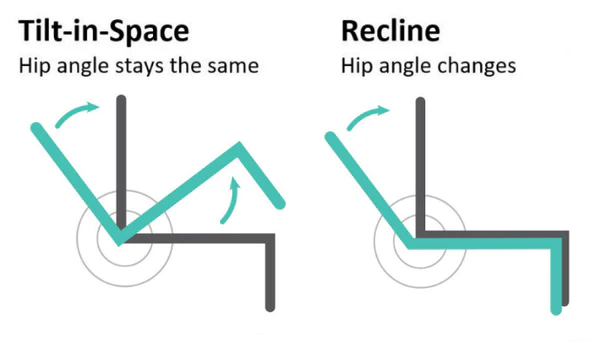
The difference between Tilt in Space & Back Angle Recline
How to Sit if you Have Lumbar Lordosis
Use the features of the chair to help support the lower back, for example waterfall backrests with cushioning in the lower area to help support the inward curve.
The tilt in space and recline functions help you open the hip angle and uses gravity to rest the lumbar spine against the backrest.
Avoid prolonged sitting in one position by making small changes in position in tilt or recline alongside standing, to prevent muscle fatigue and stiffness that come from staying in a fixed position for too long.
Find A Chair To Suit Your Needs
Our specialists will help you find the perfect solution
Recommended Chairs and Backrests for People with Lordosis
If you’re looking to specify a riser recliner that will suit someone with lordosis, then we’d suggest looking at the made to measure range. These chairs can be tailored to suit your client and their specific needs.

The Brecon rise and recline chair can be made-to-measure, which is ideal for people with lordosis because the severity of their curvature can vary so much.
In terms of care chairs, then the Lento would be most suitable. With its adjustable seat depth, width, and height, you can make sure your client’s pelvis is perfectly positioned when teamed with a waterfall backrest and tilt-in-space. Electric tilt in space is available as an upgrade, which allows the patient to adjust themselves, instead of relying on the carer to adjust using the tilt handle at the back.
The back cushions of the Lento are also attached with Velcro which is particularly good because it allows you to reposition the cushions to suit the client’s needs exactly.

Think A Lento Care Chair Is What You Need?
Our specialists will help you find the perfect solution
Tilt-in-space wheelchairs used by clients to get out and about are also beneficial, as some like the Rea Azalea feature tension adjustable backrests to shape and contour the backrest to best support the lumbar region.

Rea Azalea tilt-in-space wheelchair
Summary
The key things to bear in mind with specialist seating for people with lordosis is that they need to have a stable pelvis and a lot of support around their lumbar area.
For more information on specialist seating for medical conditions, take a look at our free seating eBook!
Download our Free Seating Ebook
Our specialists will help you find the perfect solution
Recommended Products

Made To Measure Rise & Recline Armchair
The Brecon is a classic, home style electric riser recliner armchair with comfortable scroll arms and many different backrest options to meet your needs.
Enquire About This Chair
Lento Care Chair
The Lento Care chair has been clinically designed to address the complex care needs of anyone over 5’ 2”, particularly those who need to be hoisted.
Enquire About This Chair
Rea Azalea Tilt In Space Wheelchair
The Rea Azalea Manual Wheelchair is a high level manual wheelchair which has been designed to offer some of the best comfort and support available.
Enquire About This ChairFrequently Asked Questions